
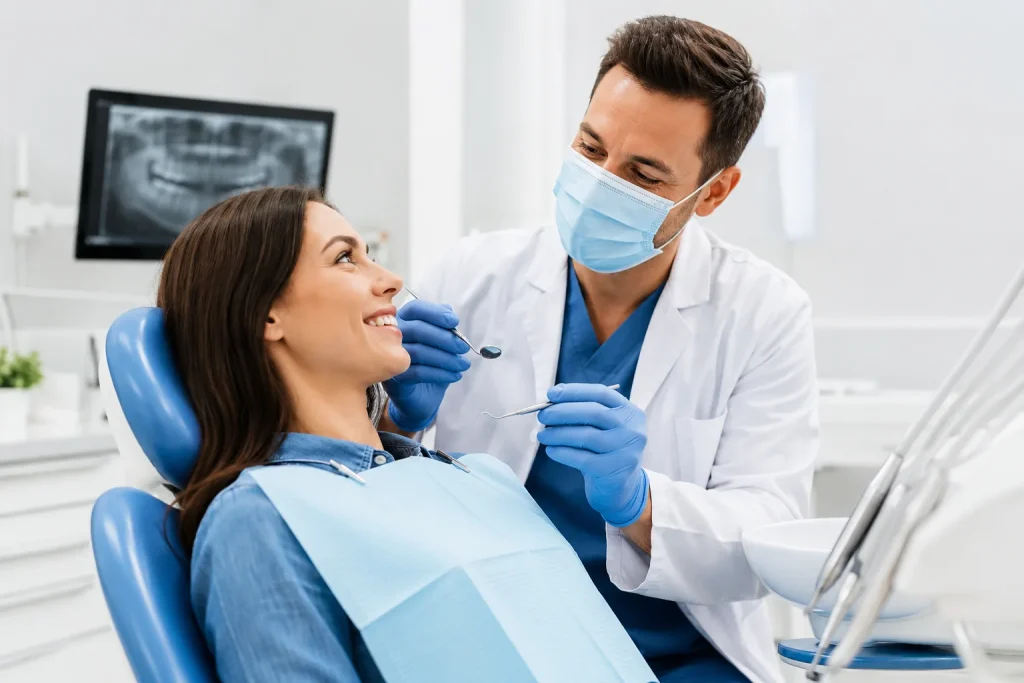
Missing teeth can affect much more than the appearance of a smile. They may make it harder to chew comfortably, speak clearly, or feel confident in social situations. Fortunately, today’s dentures offer several ways to replace missing teeth and restore everyday function.
For patients exploring dentures in Hawthorne, CA, understanding the available options is a helpful first step. Dentures are not one-size-fits-all appliances. Their design, fit, appearance, and stability depend on a person’s oral health, the number of missing teeth, personal preferences, and budget.
This guide explains the main types of dentures, what the treatment process may involve, and how patients can keep their new smile comfortable. Trusted Dental & Orthodontics offers complete and partial denture solutions for patients in Hawthorne and nearby South Bay communities.
This article provides general educational information and is not a substitute for an examination, diagnosis, or personalized treatment plan from a licensed dentist.
What Are Dentures?
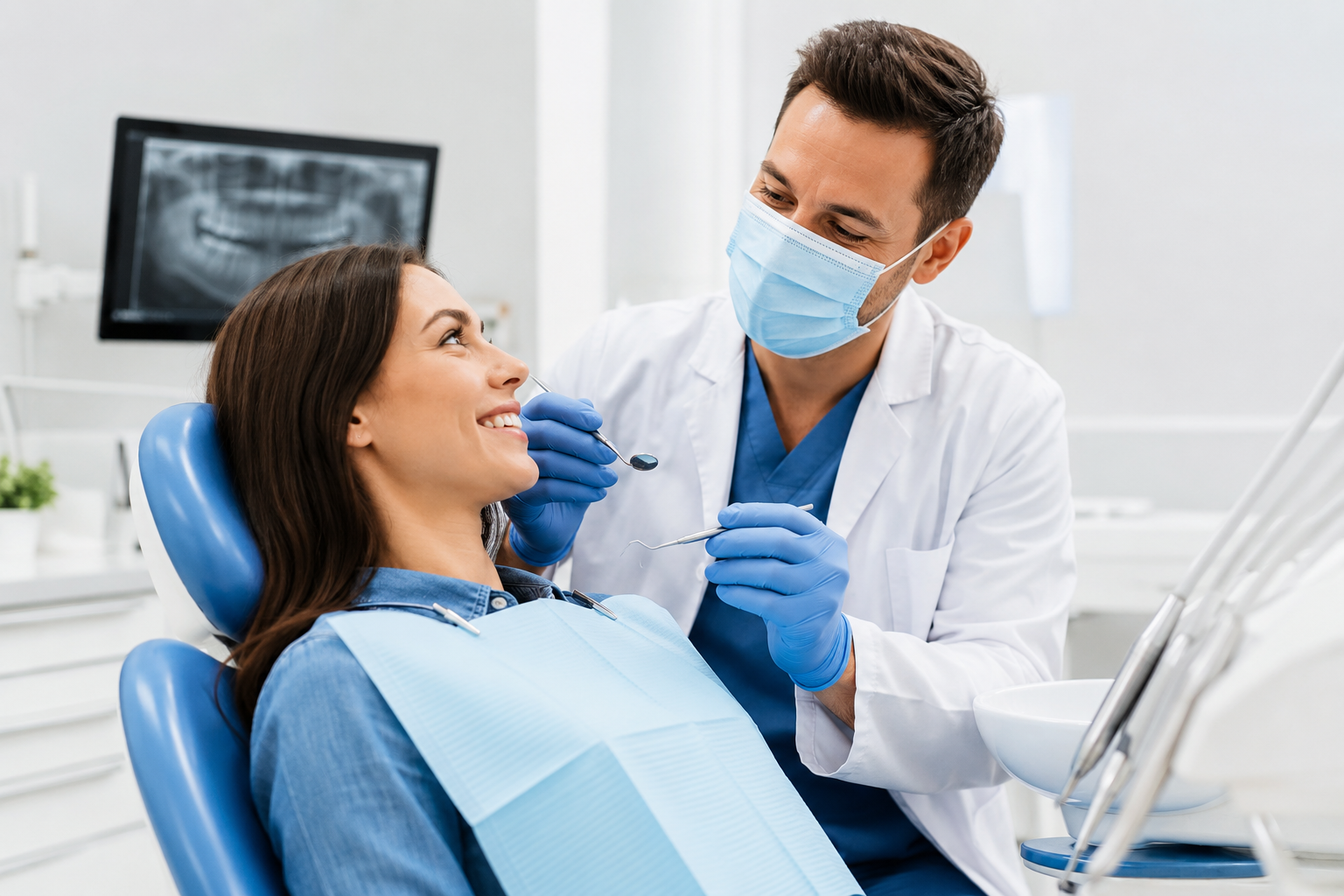
Dentures are removable dental appliances designed to replace several missing teeth or an entire row of teeth. They generally include prosthetic teeth attached to a base made to resemble natural gum tissue.
A well-designed denture should complement the patient’s face and remaining teeth while supporting practical needs such as eating and speaking. Because every mouth is different, the dentist takes measurements or impressions to create a personalized fit.
The American Dental Association identifies conventional complete, immediate, and implant-supported dentures as options patients may consider. The right choice depends on the condition of the teeth and gums, treatment goals, and whether the patient wants a removable or more stable restoration.
Types of Dentures Available
Complete dentures
Complete, or full, dentures replace all teeth in the upper jaw, lower jaw, or both. They may be recommended when no natural teeth remain in an arch or when the remaining teeth cannot predictably support another restoration.
Upper and lower dentures can feel different. An upper denture covers a broader area of the palate, while a lower denture must fit around the tongue and moving muscles. Careful planning and follow-up adjustments are especially important for comfort and stability.
Partial dentures
A partial denture fills spaces left by multiple missing teeth while preserving healthy natural teeth. It typically uses a framework or other attachments to gain support from the remaining teeth.
Partial dentures can help distribute chewing forces and create a more complete-looking smile. Their design depends on where the missing teeth are located and the health of the supporting teeth and gums.
Immediate dentures
Immediate dentures are placed shortly after designated teeth are removed, allowing the patient to leave with replacement teeth rather than waiting without them during early healing.
However, the mouth changes as extraction areas heal. An immediate denture may therefore require adjustments, relining, or eventual replacement to maintain an appropriate fit. Patients considering this option should ask how the temporary and final stages will be handled.
Implant-supported dentures
Implant-supported dentures connect to dental implants placed in the jaw. Depending on their design, they may be removable by the patient or fixed in place and removed only by a dental professional.
Implants can provide added stability, which may be appealing to people concerned about denture movement. According to the Cleveland Clinic, implant-supported denture treatment usually involves multiple steps. Early recovery after implant placement, soft-tissue healing, integration of the implants with the bone, and delivery of the final restoration are separate stages. The full process takes longer than the period required to feel ready for routine daily activities.
Not everyone is automatically a candidate for implants. A dentist must assess bone support, gum health, oral hygiene, medical history, medications, and other individual considerations before recommending treatment.
How Does the Denture Process Work?
The exact process varies according to the type of denture and whether teeth need to be removed. In general, treatment may include the following steps.
1. Dental evaluation
The dentist examines the teeth, gums, bite, and supporting tissues. Dental X-rays or other records may be recommended when they are necessary to evaluate structures that cannot be seen during a visual examination.
This visit is also a good time for the patient to discuss priorities. Some people are most concerned about stability, while others focus on appearance, ease of cleaning, treatment time, or affordability.
2. Treatment planning
The dentist explains suitable options and whether any preliminary care is needed. If natural teeth remain, the plan may involve preserving them, treating them, or removing teeth that cannot be restored. Implant-supported treatment requires its own surgical and restorative planning.
3. Impressions and bite records
Measurements or impressions help capture the shape of the mouth. Bite records show how the upper and lower jaws relate to one another. The dental team may also discuss tooth shade, shape, size, and position so that the restoration looks appropriate for the patient’s features.
4. Fitting and adjustments
When the denture is delivered, the dentist checks its fit, bite, appearance, and function. Minor pressure areas may develop as the patient begins wearing it. Follow-up visits allow the dentist to identify these areas and make careful adjustments.
Patients should not attempt to bend, file, or repair a denture at home. A small do-it-yourself change can damage the appliance or create an uneven bite.
What to Expect While Adjusting to Dentures
A new denture may initially feel unfamiliar or bulky. Speaking and chewing involve coordinated movements, so the lips, cheeks, and tongue need time to adapt.
Patients can make the transition easier by:
- Beginning with softer foods cut into manageable pieces
- Chewing slowly and using both sides of the mouth when possible
- Practicing difficult words by reading aloud in private
- Following the dentist’s instructions about when to wear and remove the appliance
- Returning for adjustments instead of tolerating a persistent sore spot
Some initial awareness is common, but ongoing pain should not be dismissed as something a patient simply has to endure. A denture that pinches, rubs, rocks, or repeatedly creates sores should be evaluated.
How to Care for Dentures and the Mouth
Dentures need daily attention even though they cannot develop cavities like natural teeth. Food debris and plaque can collect on the appliance and around any remaining teeth or implant attachments.
Patients should clean their dentures with products and techniques recommended by their dentist. Regular toothpaste may be too abrasive for some denture materials. Dentures should also be handled over a folded towel or basin of water to reduce the chance of damage if they are dropped.
The gums, tongue, palate, and any remaining teeth still require care. Patients with partial dentures must be especially attentive to the teeth supporting the appliance. Those with implant-supported dentures need instructions tailored to the areas around the implants and attachments.
Unless a dentist advises otherwise, removable dentures are generally taken out for a period each day. Patients should follow professional guidance about overnight storage because the correct method can depend on the appliance material.
When Should a Denture Be Checked?
A denture can continue to look intact even when its fit has changed. Oral tissues and supporting structures may change over time, while the appliance keeps its original shape. Routine dental visits allow the dentist to evaluate the denture, oral tissues, bite, and remaining teeth.
Patients should schedule an evaluation if they notice:
- Persistent soreness, irritation, or bleeding
- A loose denture that moves during eating or speaking
- New clicking or difficulty chewing
- Cracks, chips, bent components, or worn teeth
- A sudden change in how the upper and lower teeth meet
- Red, white, swollen, or otherwise unusual areas in the mouth
Prompt care can help identify whether the appliance needs a simple adjustment, a professional repair, a reline, or replacement. New or persistent oral changes also deserve professional evaluation rather than self-treatment.
How Much Do Dentures Cost in Hawthorne, CA?
Denture costs vary because treatment plans vary. Important factors include whether the patient needs a full or partial denture, the materials selected, necessary preliminary dental care, laboratory work, the number of appointments, and whether implants are part of the plan.
When comparing estimates, patients should ask what the quoted fee includes. Useful questions include whether follow-up adjustments, temporary appliances, relines, extractions, imaging, or implant components are billed separately.
Dental insurance may cover part of eligible treatment, but benefits and limitations differ by plan. The dental office can review available benefits and discuss payment or financing options before treatment begins. A personalized examination is the most reliable way to receive an accurate estimate.
Frequently Asked Questions About Dentures
Will dentures look natural?
Modern dentures can be customized for tooth color, shape, size, and arrangement. The goal is not necessarily to create a perfectly uniform smile, but one that suits the patient’s facial features and preferences. Patients should share photographs or appearance concerns during the planning stage.
Can a person eat normally with dentures?
Dentures are intended to improve chewing compared with leaving several teeth missing, but they do not function exactly like natural teeth. New wearers often begin with softer foods and gradually expand their diet as comfort and control improve. Hard, sticky, or difficult-to-chew foods may require caution depending on the denture design.
Are denture adhesives always necessary?
Not necessarily. Some patients use adhesive for added confidence, while others do not need it. Adhesive should not be used to disguise a poorly fitting or damaged denture. If increasing amounts are needed to keep the appliance in place, the fit should be checked by a dentist.
Can dentures be repaired at home?
Home repair kits and household glues can damage denture materials, affect the fit, or expose the mouth to inappropriate substances. Broken dentures should be kept safe and taken to a dental professional for assessment.
Are implants better than traditional dentures?
Neither option is automatically best for everyone. Implant-supported dentures may offer greater stability, but they require additional evaluation, procedures, healing, maintenance, and expense. Traditional removable dentures may be more appropriate for patients who want a nonsurgical option or have different health and financial considerations.
Find the Right Denture Option in Hawthorne
Choosing dentures involves more than replacing visible teeth. The restoration must work with the patient’s bite, oral tissues, remaining teeth, lifestyle, and long-term care needs. A thoughtful consultation gives patients an opportunity to compare complete, partial, immediate, and implant-supported options without making assumptions about what will work best.
Trusted Dental & Orthodontics welcomes patients seeking dentures in Hawthorne, CA. The practice is located at 14248 Hawthorne Blvd, Hawthorne, CA 90250. To ask a question or request an appointment, patients can visit the contact page or call +1 424-484-7002. A personalized examination can clarify the available choices and help create a comfortable, practical path toward a restored smile.