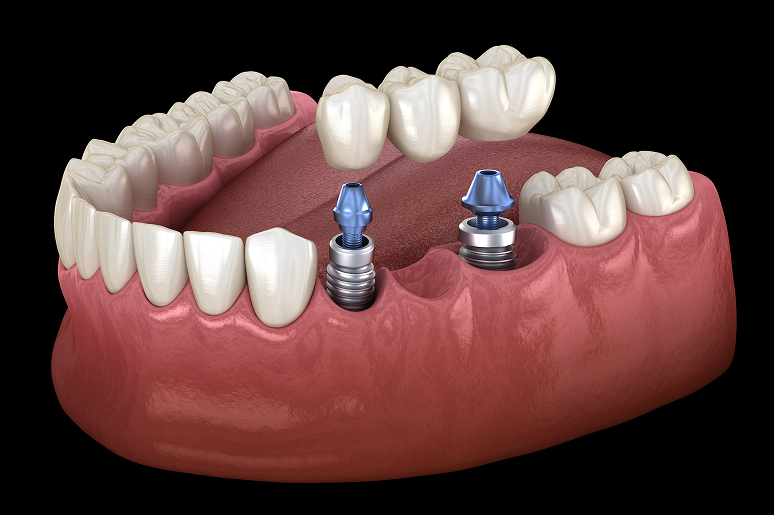
A dental bridge permanently replaces one or more missing teeth with natural-looking restorations anchored to surrounding teeth or implants. Restore your smile, your bite, and your confidence without surgery.

WHY REPLACE MISSING TEETH
When a tooth is missing, the surrounding teeth gradually shift toward the gap. The opposing tooth can over-erupt. Bone in the area begins to resorb. Chewing becomes uneven, placing stress on remaining teeth and the jaw joint. Even a single missing tooth can trigger a cascade of problems if not replaced.
A dental bridge addresses all of these consequences — restoring full function, preserving alignment, and filling the gap with a natural-looking prosthetic tooth that is permanently fixed in place.
BRIDGE OPTIONS
We'll evaluate your specific situation and recommend the bridge design that provides the best outcome for your smile and oral health.
The most common type. Crowns are placed on the teeth on either side of the gap, with an artificial tooth (pontic) suspended between them. Suitable for most patients with healthy adjacent teeth.
Instead of crowns on natural teeth, the bridge is anchored to two dental implants. This preserves the adjacent teeth and provides the most stable, bone-preserving tooth replacement option.
Used when there is only one adjacent tooth to anchor the bridge. Less common due to increased stress on the supporting tooth, but appropriate in specific clinical situations.
A conservative option that bonds a metal or porcelain framework to the backs of adjacent teeth without full crowns — minimal tooth reduction, best for front teeth replacement.
THE BRIDGE PROCESS
A traditional dental bridge typically takes two appointments. At the first visit, we prepare the anchor teeth by reshaping them to accept crowns, take a digital scan of the area, and place a temporary bridge to protect the teeth while your permanent bridge is fabricated.
At the second appointment (usually 2–3 weeks later), the permanent bridge is tried in, adjusted for fit and bite, and then permanently bonded into place. The result is a seamless, fixed restoration that feels and functions like natural teeth.
WHY CHOOSE TRUSTED DENTAL
Our precision approach, high-quality materials, and detailed bite analysis produce bridges that fit perfectly, look natural, and stand the test of time.
Digital scans create bridge impressions far more accurate than traditional materials, resulting in a better-fitting final restoration.
We use high-strength porcelain and zirconia fabricated at top-tier dental labs for natural aesthetics and long-term durability.
We carefully analyze your occlusion (bite) to ensure the bridge distributes chewing forces evenly and doesn't stress adjacent teeth.
We maximize your dental benefits and provide clear, upfront cost estimates. Financing options are available to fit any budget.
COMMON QUESTIONS
Answers to the questions we hear most from patients in Hawthorne and across the South Bay.
With proper care, a traditional porcelain bridge lasts 10 to 15 years. Some last considerably longer. The key factors are oral hygiene (especially flossing under the bridge), regular checkups, and avoiding hard or sticky foods.
Implants are generally considered the gold standard because they replace the root and preserve bone. However, bridges are an excellent alternative for patients who cannot or prefer not to have implant surgery. We'll help you weigh the pros and cons for your specific situation.
Yes. Modern porcelain bridges are designed to match your adjacent teeth in shape, shade, and translucency. Most people — and most dentists — cannot tell the difference between a well-made bridge and natural teeth.
Yes, once fully cemented you can eat a normal diet. We recommend avoiding very hard or sticky foods that could chip the bridge. Floss threaders or water flossers help clean effectively under the pontic area.
The tooth preparation is done under local anesthesia, so the procedure itself is comfortable. Some sensitivity in the prepared teeth is normal for a few days after each appointment and resolves quickly.
Most PPO dental insurance plans cover bridges as a major restorative service, typically at 50% after the deductible. We'll verify your specific benefits and provide a clear cost estimate before starting treatment.
Don't let a missing tooth affect your smile, bite, or confidence. Book an Appointment at our Hawthorne office and explore your options.